

Since 1943


Manteco started with an old military blanket back in 1941, from a semi-destroyed spinning mill to a flagship in the textile industry
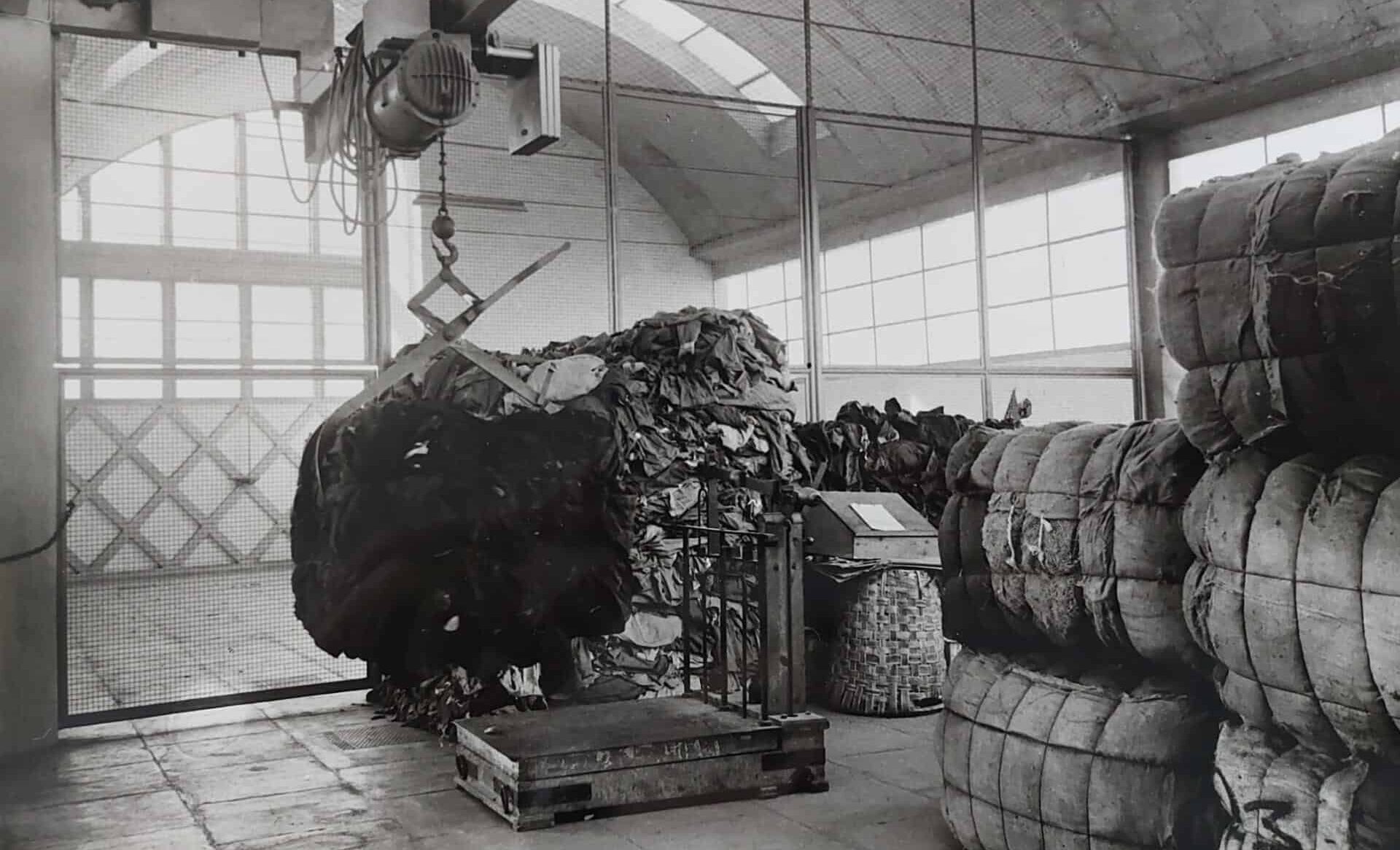
Our journey started back in the 1940s in a small town called Resina, close to Naples, where military goods were gathered from across Italy. Croce Rossa and other charitable societies collected and sorted all manner of goods from blankets, knits, shirts and other military garments that were no longer wearable and sold them to the highest bidders. At the time the situation in Italy was critical, with the country left devastated by the war. Meaning that there were just a small number of domestic sheep pastures, limited shipments of raw materials from abroad and no money to be invested, yet those military blankets and garments were made of high-quality and extra-fine worsted wool.
A story of great intuitions and determination that begins with Enzo Anacleto Mantellassi and continues for three generations
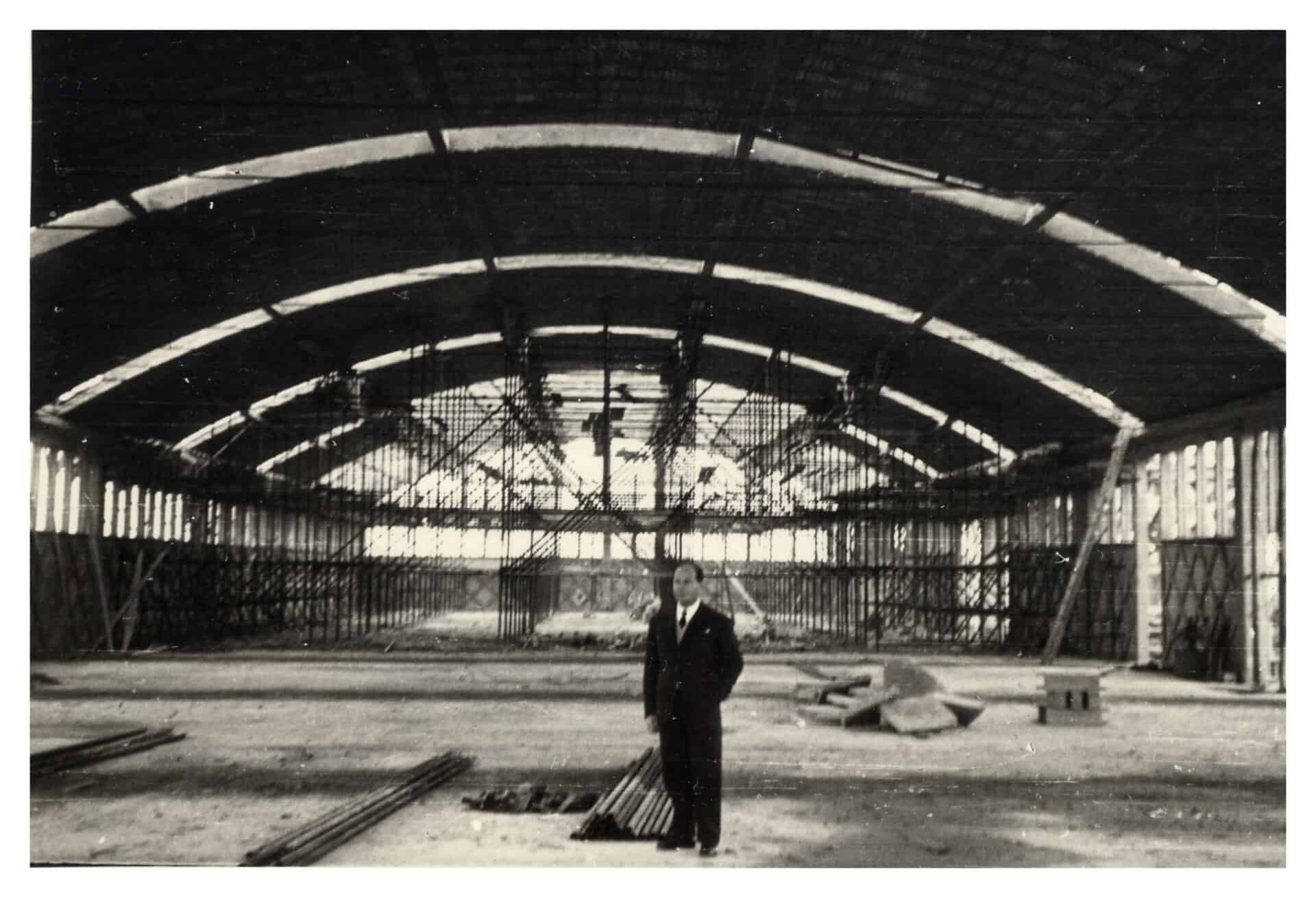
So our founder, Enzo Anacleto Mantellassi, who had just established our business by buying a semi-destroyed spinning mill, immediately understood the great potential in trading this commodity. He established a process of having large quantities of second-hand military blankets and garments transported to Prato, where the goods began their transformation journey and were brought back to life. Each garment was shredded, then spun to create precious recycled wool yarns, all without using chemicals, simply through a mechanical and wet process, and this process is still used today. In the beginning, there were restrictions due to the material, that created thick yarn and also the colour: military green, khaki, brown and navy, therefore initially Enzo weaved these to create heavy blankets rather than fabrics.
With the passing of years, the gathering that was done in Resina was no longer enough for the business
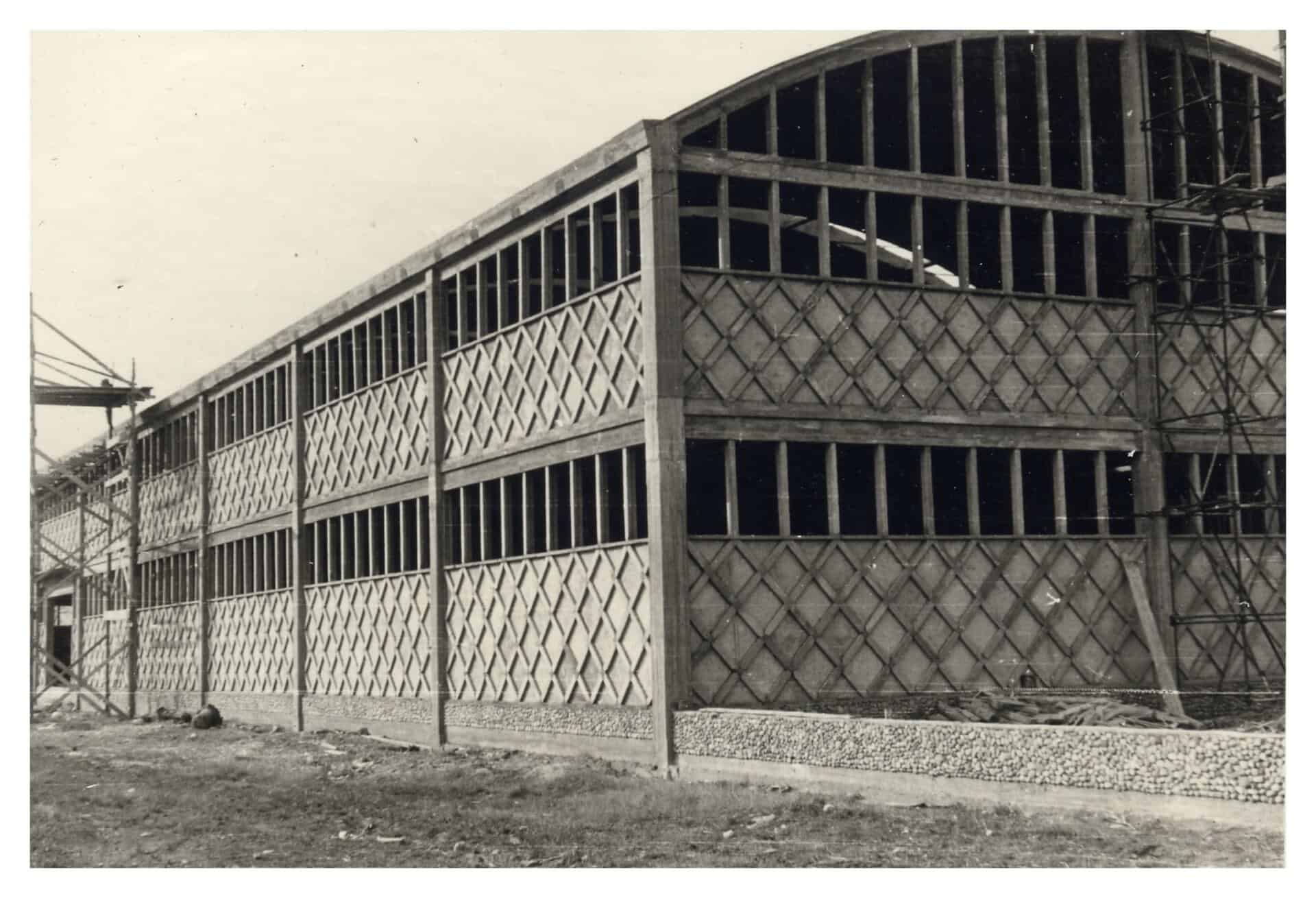
So Enzo decided to set up his own, by conceiving an innovative system divided into three floors.
-
The third floor was used as a gathering place, where unsorted garments and blankets were divided by hand according to composition and micronage, then passed to the second floor through specific holes.
-
The second floor was yet another sorting place, when the sorted garments were re-sorted by color and shade, in order to create homogeneous bales.
-
The first floor represented the place where these garments and blankets were given a new life: They were all shredded and prepared for carded spinning processes.
During the years, our family business has refined the recycling process and taken it to the luxury world.
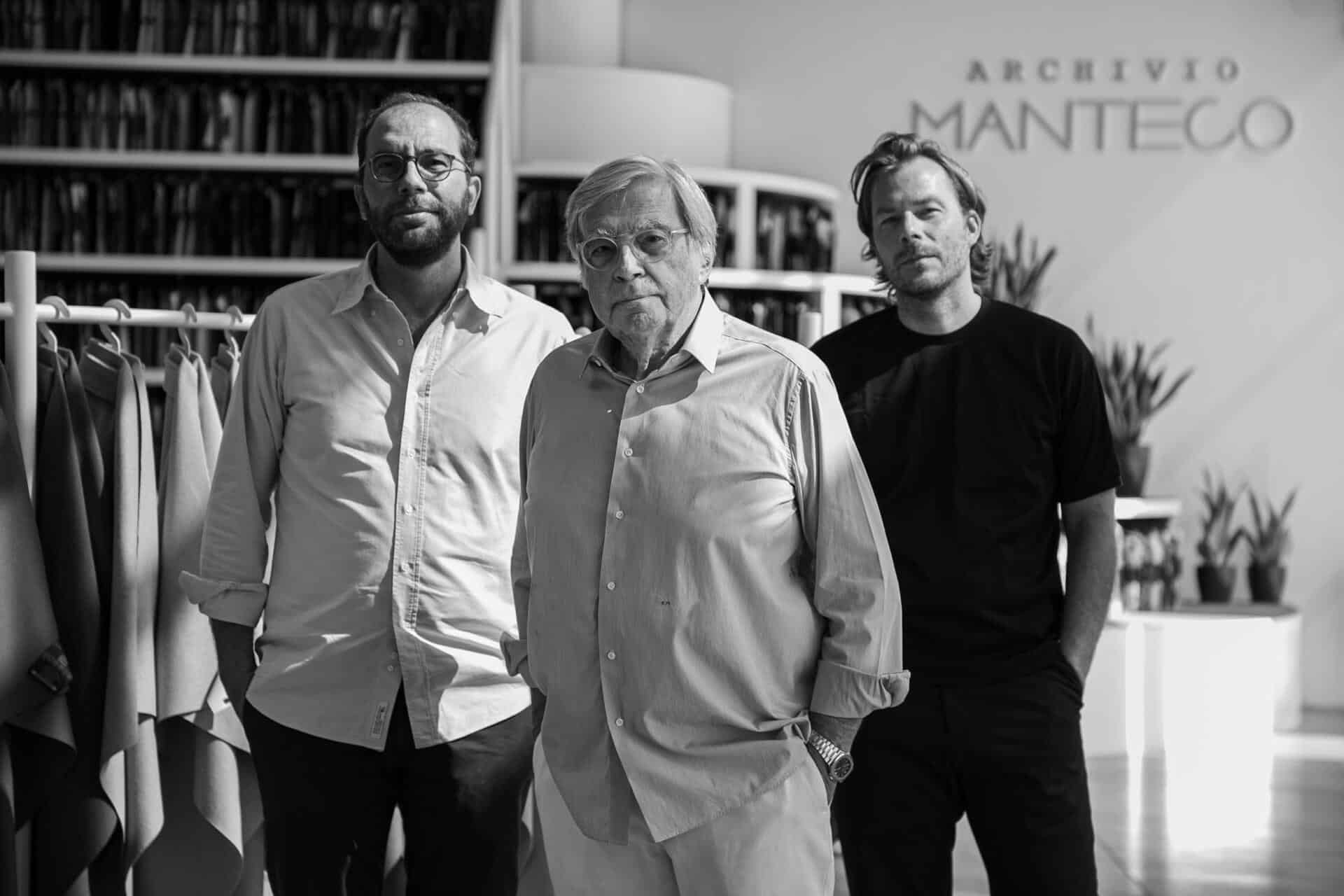
In fact, we are now able to produce an endless range of undyed regenerated wool colours through the Recype® process, and we also offer a wide range of luxurious fabrics with different constructions, weavings and finishings, all made with our next-generation of recycled wool, MWool®. Nowadays, Manteco constantly pursues the objectives of growth and expansion, always with an eye to enhancing our values of sustainability, innovative solutions and improving our flagship zero-waste system, our sustainable design and traceable circular economy projects. We are adhering to the principles of the UN Agenda 2030 for sustainable development and was the first textile company to ever apply a science-based LCA (Life Cycle Assessment) study on its luxury recycled wool textiles. Behind our green approach and premium quality fabrics, there are generations of know-how, heritage and our fully traceable and transparent Manteco System, a network of local artisans and small companies that follow our precise Supply Chain Commitments and high production standards.
-
1941
A pioneering insight
Enzo Anacleto Mantellassi starts his activity in the textile industry during an extremely complex historical period marked by the Second World War. Due to the scarcity of raw materials and limited financial resources, Enzo is forced to devise creative solutions to obtain the wool he needs and to restart a spinning mill that has been severely damaged by the conflict. It is in this context that he has a remarkable intuition: recovering old garments and military wool blankets and transforming them back into regenerated raw material, ready to be spun again. In doing so, Enzo turns the lack of materials into a driving force for innovation, laying the foundations for the circular economy that will become the essence of Manteco®’s values and long-term vision.
-
1943-1945
The Lanificio San Marco and the admission to Confindustria
After two years of trials and experimentation, Enzo Anacleto Mantellassi develops an efficient recovery system and a high-quality yarn. These results lead him to acquire his first looms and, in 1943, to found the Lanificio San Marco. This marks the beginning of the production of carded fabrics in regenerated wool and cashmere. In 1945, the company’s entry into Confindustria strengthens its rapid industrial and economic growth, confirming its commitment to an innovative production model.
-
1952-1967
The new headquarters and the first generational transition
After a period of strong growth, the Lanificio San Marco begins the construction of a new headquarters, the first in Italy made of prestressed concrete. The project, designed by structural architect Enzo Vannacci with the collaboration of Ferdinando Ghelli, Pierluigi Spadolini and Giovanni Michelucci, reflects the company’s intention to connect its industrial identity with the values of well-being, beauty and social identity. Alongside his entrepreneurial abilities, Enzo shows a strong social sensitivity: he introduces music systems in the production halls to reduce acoustic pollution, and he installs heating, significantly improving workers’ well-being. In 1967, after Enzo’s passing, his son Franco Mantellassi, recently graduated in engineering, joins the company and leads its transition into a new phase of production.
-
1971-1988
New collections, new markets and the birth of Manteco®
Franco Mantellassi expands the company’s collections by introducing linen, cotton, silk and viscose. At the same time, he develops and refines cutting-edge techniques to enhance regenerated wool and cashmere, creating fabrics that establish themselves on the market and become true status symbols of the era. The company opens up to international markets by participating in major industry fairs in Frankfurt, Paris, Hong Kong, New York, Moscow and Tokyo, and by establishing commercial offices in the most strategic regions. In 1983, it officially adopts the name Manteco®, marking a new phase of its identity. In 1988, the company contributes to the founding of the Luigi Pecci Centre for Contemporary Art, strengthening its connection with culture and the local territory.
-
1999-2000
Second generational transition
With the arrival of Marco and Matteo Mantellassi, the company enters what can truly be considered a “second life” and a genuine phase of renewal. At a time when many companies decide to relocate production to reduce costs, Manteco® makes a farsighted and counter-trend choice: committing to a 100% Made in Italy production. This decision further strengthens the company’s bond with its territory and places the focus on quality and excellence. By valuing its traditions and reinforcing the principles of circularity, the company initiates a path of innovation and refinement of regenerated wool and cashmere, with the aim of reaching increasingly higher quality standards.
-
2002
Circularity and patented innovation
Through intensive research and high-level innovation leading to multiple patented technologies, the company strengthens the connection between circularity and luxury. Manteco® thus positions itself as a pioneer of an avant-garde model, choosing to focus on responsible, high-quality fabrics, with unprecedented objectives for the industry.
-
2008-2009
The Launch of BiBye® and the recognition as an Ingredient brand
After years of research and development, Manteco® launches BiBye®: an innovative double fabric made from both recycled and virgin wool, durable, versatile, and featuring a new value: recyclability. Engineered for modern times, it responds to the evolving needs of life and the market, rapidly becoming an iconic product worldwide. Its success strengthens Manteco®’s image as a global benchmark for quality, sustainability and innovation, leading it to become a true Ingredient Brand. A growing number of fashion labels choose to include Manteco® tags inside their garments, certifying the quality of the fabrics used.
-
2012-2015
The new headquarters and the Circularity Lab
Manteco® transforms a series of abandoned industrial warehouses into its current headquarters: a modern, efficient hub powered by photovoltaic panels. Remaining faithful to its philosophy, the company chooses not to consume new land, instead restoring existing structures and preserving the surrounding natural landscape. The facility hosts offices, showrooms and the Circularity Lab, an area dedicated to the study and experimentation of colours, fibres, yarns and regenerated wool and cashmere fabrics. It is a space designed to foster continuous, coordinated research focused on enhancing craftsmanship through innovation.
-
2016
MantEco for Planet Roadmap, Msystem and the Zero-Waste Project
Manteco® launches the MantEco for Planet roadmap, a sustainability strategy fully aligned with the United Nations Sustainable Development Goals (SDGs), an ambitious initiative that earns the prestigious Radical Green Prize. In the same period, the company introduces two significant projects: MSystem®, a supply-chain network composed of selected partners who sign the Charter of Supply Chain Commitments to ensure transparent, responsible and ethical collaboration; and the Zero-Waste Project, dedicated to recovering and regenerating wool waste throughout the entire production chain.
-
2017
The introduction of MWool®, Project 43 e Recype®
In a year marked by major milestones, Manteco® elevates circular wool to an unprecedented level with the launch of MWool®, the new generation of regenerated wool, while also patenting Recype®, an innovative colour-creation technique that requires no chemical dyes. The company’s commitment to reducing the environmental impact of the textile chain extends beyond industrial processing and reaches the garment-making phase with the launch of Project43. This fully traceable initiative enables the recovery and regeneration of cutting scraps, transforming them into new fabrics. Manteco’s leadership in sustainability is reinforced by significant certifications. It estabilesh itself as the first textile company to obtain GRS (Global Recycled Standard) certification for MWool®. It also achieves RWS (Responsible Wool Standard) for virgin wool and OCS for sustainable cotton, and adheres to the BCI (Better Cotton Initiative).
-
2018
The Archivio, Manteco® Academy and the launch of Woolten®
This is the year of the launch of Woolten®: an innovative fabric created by combining MWool® with Tencel®, the ecological fibre produced by the Austrian company Lenzing, in a patented blend developed by Manteco®. To celebrate its 75th anniversary, Manteco® inaugurates the Manteco® Archive, a space dedicated to preserving the company’s entire creative heritage, with more than 100,000 fabrics, colours and designs developed over the decades. In the same year, the Manteco® Academy is established, an educational initiative supporting fashion schools and young designers. Its mission is to pass on technical knowledge, company know-how, and encourage responsible design among the new generations through dedicated lectures, guided tours and competitions on the relationship between fashion and circular economy.
-
2019-2020
The European recognition and the scientific leadership
Manteco® begins its first interactions with the European Union, receiving formal recognition for the value of its work from European Commissioner Elżbieta Bieńkowska, who visits the company and describes it as a virtuous example of circular economy and sustainability. Additionally, the company becomes the first in the world to apply Life Cycle Assessment (LCA) to a regenerated wool fabric, MWool®, introducing a scientific, measurable and verifiable approach to sustainability.
-
2021
Pure® fabric and Manteco®’s membership in the Ellen MacArthur Foundation
Manteco® launches Pure®, a new generation of ultra-high-quality fabrics made from 100% MWool®. It represents a long-considered unattainable milestone, one that no other company in the world had previously achieved. The company joins the Ellen MacArthur Foundation, one of the most influential global organisations dedicated to accelerating the transition to a circular economy, and also enters the SDA Bocconi Monitor for Circular Fashion, which brings together major brands and key industry players to define and monitor circularity KPIs. Manteco® also obtains the European Flax certification for the linen fibres used in its products.
-
2022
Vita® fabrics, scientific research and EPD certifications
Manteco® launches Vita® fabrics, made from MWool®, with the aim of achieving unprecedented strength and durability in regenerated wool. Durability becomes a key value, intended to significantly extend the useful life of garments. The company’s scientific commitment is further strengthened by the publication of a groundbreaking Life Cycle Assessment (LCA) of MWool® fibres, developed in collaboration with the Politecnico di Torino. This analysis receives EPD (Environmental Product Declaration) certification and is published in the scientific journal MDPI. Additional scientific publications on the marine biodegradability of MWool® fibres reinforce this research path. Finally, Manteco® joins ZDHC Supplier to Zero, confirming full compliance with MRSL standards.
-
2023
ReviWool®, awards and Casentino Lane
This is a year of major achievements and confirmations. Manteco® launches Reviwool®, a low-impact virgin wool supported by a Life Cycle Assessment (LCA) and published in the Journal of Cleaner Production, earning an additional EPD certification. Thanks to its innovations, the company receives several prestigious international awards, including the Climate Action Award at the Sustainable Fashion Awards of the Camera Nazionale della Moda Italiana, the “Top 100 Performance” prize at the 2023 Crédit Suisse Sustainability Award, and the “Forum Prize 2023” by TextilWirtschaft. In the same year, Manteco® acquires Casentino Lane, a historic spinning mill located in Tuscany, in an area recognised as a UNESCO heritage site and known for a textile tradition dating back to the 14th century, further strengthening its bond with Made in Italy craftsmanship.
-
2024
Climate Project of the Year
Manteco® receives the prestigious international Climate Project of the Year award at the Climate and Nature Impact Awards by Textile Exchange in Pasadena, Los Angeles, in recognition of the exceptional value of its MWool® and Reviwool® fabrics. In the same period, the company publishes an important study on ScienceDirect entitled “Closed Loop Mechanical Recyclability of Post-Consumer Waste Wool: A Case Study on MWool®”, which analyses and demonstrates the closed-loop mechanical recyclability of post-consumer wool waste.
-
2025
From Parliament to Liberty & EUSPA Satellite Monitoring the EU
Manteco® is invited to the European Parliament on behalf of Confindustria as a benchmark company for 'Made in Italy' textiles. 2025 stands out for a series of high-profile collaborations. The brand is chosen by Liberty for a partnership celebrating its 150th anniversary—a perfect blend of British design and Italian craftsmanship. Additionally, a cross-industry project with Gmund comes to life, creating a collection of fine paper made from residual Manteco® cotton fibers. On the innovation front, Manteco expands its portfolio with 5 new patents and launches a major pilot project with EUSPA (the European Union Agency for the Space Programme): the initiative leverages satellite intelligence to monitor biodiversity and better understand environmental impacts. Finally, in the same year, a collaboration with the University of Leeds leads to the publication of the scientific study “Beyond a second life: Mechanical recyclability of woven fabrics containing recycled wool,” which demonstrates that MWool® fabrics can withstand at least one additional mechanical recycling cycle within a closed-loop system.

Recounted by Franco Mantellassi, President of Manteco
Read more
Sign up for Manteco updates
Type your e-mail address and stay up to date on Manteco news, events and initiatives
